
How to Audit a Chinese Pop-Up Socket Factory Before Your First Order: A Practical Checklist

Sourcing pop-up sockets, sliding sockets, or track power systems from China can deliver significant cost advantages and access to OEM customization that simply isn’t available from Western distributors. But for importers and furniture manufacturers placing their first order with a Chinese supplier, one question always comes up:
“How do I know I can actually trust this factory?”
The answer is a structured factory audit — and you don’t need to fly to Guangdong to do it. A thorough remote audit, combined with a well-designed sample process, gives you 80% of the information you need to make a confident sourcing decision.
This guide walks you through the five key areas to evaluate before placing your first purchase order with any Chinese desktop socket manufacturer.
Step 1: Verify Certifications — The Non-Negotiable Starting Point
Certifications are not marketing materials. They are legal documents, and you should treat them that way.
For furniture hardware sold into the European market, the minimum baseline is CE marking and RoHS compliance. If you are shipping to the UK, you additionally need UKCA certification. Beyond these, look for:
- CE Declaration of Conformity (signed, dated, covering the specific product model)
- RoHS compliance certificate (restricts hazardous materials including lead and mercury)
- Test reports from an accredited third-party laboratory (not just the factory’s own internal tests)
- Fire-retardancy test results for the socket housing material
What to actually check:
Don’t just accept a certificate image in a WeChat message. Ask the supplier to send the original PDF. Then verify:
- Does the company name on the certificate match the factory you are dealing with?
- Does the product model number on the certificate match what you are ordering?
- Is the certificate within its validity period?
- Is the issuing laboratory recognized? (SGS, TÜV, Intertek, Bureau Veritas are all credible)
A supplier who hesitates to share original certificates, or who can only provide certificates for a different model than the one you want to order, is a red flag. Professional manufacturers keep their certification documentation organized and share it readily.
Step 2: Assess Production Infrastructure — Factory or Trading Company?
One of the most common mistakes first-time importers make is paying factory prices to a trading company. Traders often present themselves as manufacturers online, but they are middlemen who outsource production — which means less quality control, slower response to issues, and higher costs passed to you.
Here is how to tell the difference:
| Checklist Item | What to Look For |
|---|---|
| Own production line | Ask for a factory tour video — specifically the assembly line, not just the showroom |
| In-house mold workshop | Factories with their own mold room can do deep customization; traders cannot |
| R&D team | Ask who designs new models — a real factory will name their engineering team |
| Quality control staff | Ask how many QC inspectors they have and at which production stages |
| Business license type | “Manufacturing” or “Production” on the license; not just “Trading” or “Import/Export” |
When you visit a factory’s website or Alibaba profile, look for photos of actual production equipment — injection molding machines, PCB assembly stations, spring-winding machines — not just glamour shots of the finished product.
Step 3: Evaluate Quality Control — What Happens Before the Box Is Sealed?
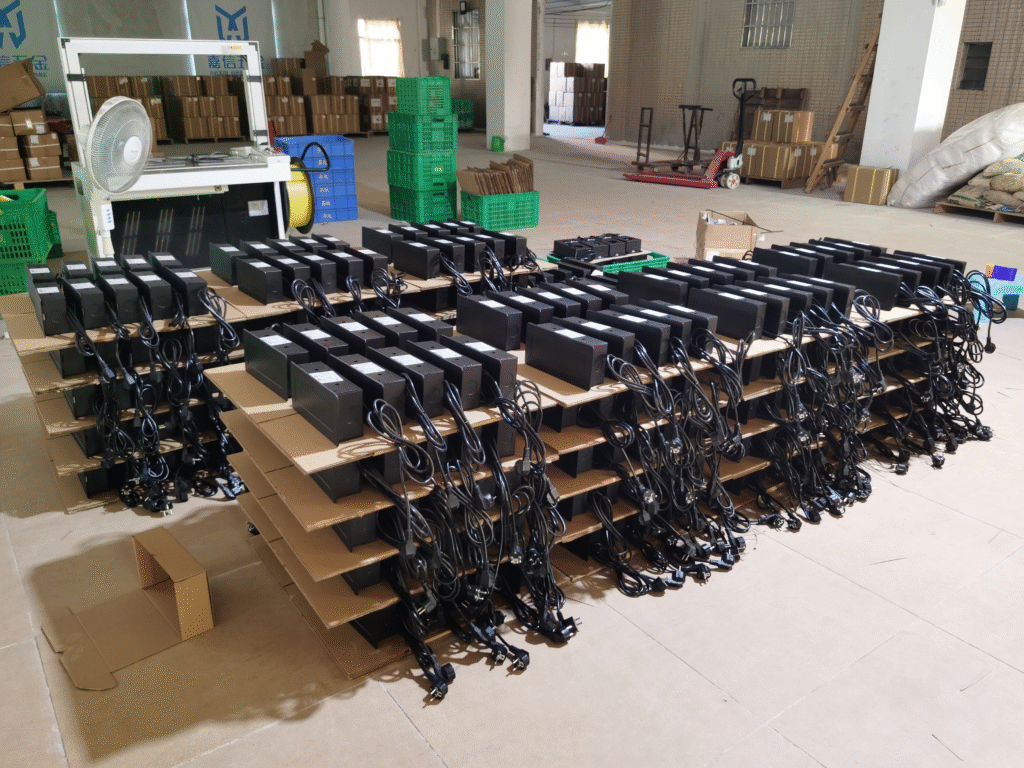
The most common complaint furniture manufacturers have after receiving their first batch from China is inconsistency: some units work perfectly, others have loose mechanisms, scratched surfaces, or incorrect wiring. This almost always comes down to inadequate QC processes.
A professional pop-up socket manufacturer should be able to explain their QC process in specific, technical terms. Ask these questions directly:
- What percentage of units are inspected? (The answer should be 100% for safety-critical electrical products)
- At which production stages does inspection occur? (Incoming components, during assembly, final output — all three matter)
- What specific tests are performed on each unit? (Mechanical lift-cycle test, electrical load test, surface finish check)
- How do you handle defects found during QC? (Rework process, rejection rate data)
- Can you provide inspection records or QC reports from a recent production batch?
A factory that performs 100% quality inspection on finished units — testing every socket before it ships — is investing real labor cost into quality assurance. This is the standard you should expect for electrical hardware going into furniture products.
Step 4: Test OEM and Customization Capability
If you are a furniture manufacturer or wholesaler building a product line, you almost certainly need more than a standard off-the-shelf socket. You may need specific plug configurations for your market (Schuko for Germany, Type G for the UK, Type C for the Middle East), custom surface colors to match your furniture collection, or logo engraving for private-label products.
Not every factory can handle all of these. Here is what to clarify before committing:
- Plug module configuration: Can they mix different country standards in one unit (e.g., two EU + one USB-C)?
- Color customization: Do they support RAL color matching for anodized aluminum or powder-coated finishes?
- Logo options: Is laser engraving available, or only silk-screen printing? What is the minimum order for custom branding?
- Packaging: Can they produce custom retail packaging or OEM-branded boxes?
- Technical drawings: Will they provide CAD files and cut-out templates for your furniture design team?
Ask for their OEM MOQ (minimum order quantity for customized items) upfront. Reputable factories are transparent about this. A common structure is lower MOQ for color customization (e.g., 100–200 units) and higher MOQ for new mold development (e.g., 500+ units). If a supplier claims they can do any custom order with no minimum, be skeptical — that often means they are outsourcing the work.
Step 5: Run the Communication and Sample Test
The sample stage is a rehearsal for your entire working relationship. How a supplier handles your sample request tells you more about their operational culture than any certificate or factory photo.
A professional supplier should:
- Respond to your inquiry within 24 hours with specific, technical questions about your requirements — not just a generic price list
- Provide a clear sample fee policy (fees are normal; the question is whether they are deducted from your bulk order)
- Ship the sample with a professional packing list and a brief QC report
- Follow up proactively after you receive the sample to ask for your feedback
- Be able to discuss your installation scenario and flag any potential compatibility issues with your tabletop thickness or hole-cutting specifications
Pay attention to the quality of communication, not just the speed. A salesperson who uses correct technical terminology — discussing anodizing grades, spring tension ratings, PCB current ratings — signals a factory with real engineering depth. A salesperson who only discusses price and delivery time may not have the technical backing to solve problems when they arise on the production floor.
The 5-Point Factory Audit Summary
| Audit Area | What to Confirm |
|---|---|
| Certifications | CE, RoHS originals with matching model numbers and valid dates |
| Production Infrastructure | Own factory, mold workshop, R&D team — confirmed by video |
| Quality Control | 100% unit inspection, multi-stage QC, inspection records available |
| OEM Capability | Plug config, color, logo, CAD drawings, transparent MOQ policy |
| Communication & Sample | Fast, technical, proactive — treats the sample as a project, not a formality |
Final Thoughts: What Good Looks Like
A factory that scores well across all five of these areas is not just a vendor — it is a production partner. The goal of this audit is not to find a reason to distrust suppliers; it is to find suppliers you can genuinely trust, so you can build a long-term supply relationship that supports your business growth.
For furniture manufacturers and importers sourcing desktop power solutions for the European or Middle Eastern market, the right factory partner means consistent quality, reliable lead times, and the technical flexibility to grow your product range over time.
Ready to Audit Moonian? We Welcome It.
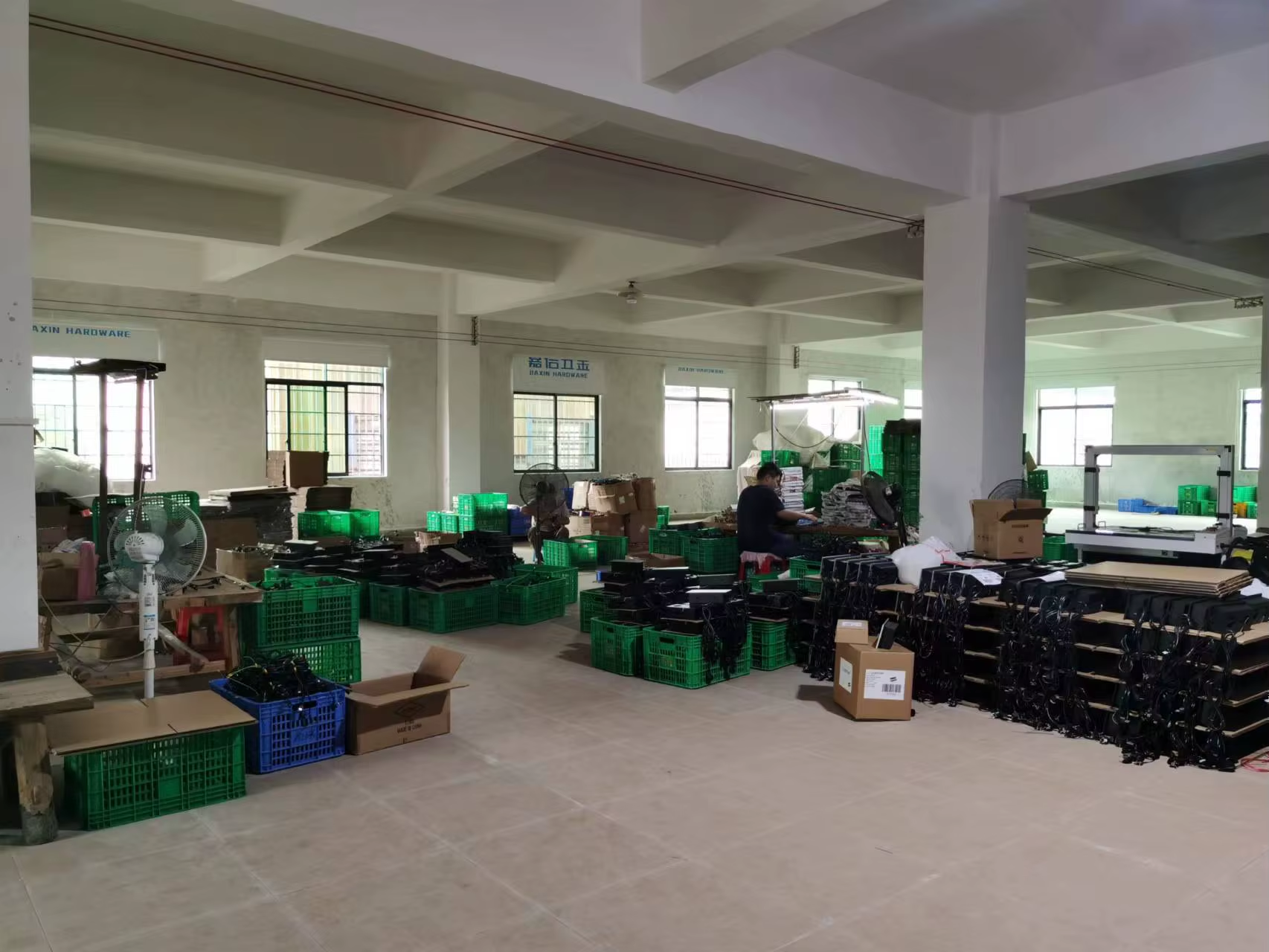
Moonian is a factory established in 2018 in Zhaoqing, Guangdong, with an in-house mold workshop, a dedicated R&D team, and CE/RoHS-certified production lines. We perform 100% quality inspection on all finished units before shipment, and we provide full technical documentation — including CAD drawings and cut-out templates — as standard.
If you are currently evaluating suppliers for a furniture power integration project, we invite you to put us through this exact checklist. Explore our core product ranges:
- Pop-Up Desktop Socket — flush-mount power integration for desks and conference tables
- Pull Pop-Up Socket — space-saving vertical design for slim tabletops
- Sliding Cover Socket — sleek flush finish for executive and luxury furniture
- Power Track Socket — flexible repositionable outlets for kitchens, labs, and co-working spaces
Or contact us directly to request samples, certifications, or a factory tour video.